Mental health supports for real life
Evidence-informed services, grounded in compassion
Our Services

1-hour phone or video consultation and tailored advice on any of these topics:
Individual or Personal:
Personal wellbeing & resilience to support coping, balance, & sustainable wellbeing
Dealing with change - work, study, health, care giving, identity
Developing a self-care routine & making it stick
How to bounce back after burnout
Workplace topics:
Professional reflection & burnout prevention
Embedding trauma-informed principles into policies, leadership, & daily practice
Leadership wellbeing support for effective management of people & performance
Staff wellbeing, engagement, & retention strategies
Service review (or development) to ensure offerings are intersectional, inclusive, culturally competent, evidence-informed, & trauma-informed
Educational topics:
Trauma-informed practice in education
How to write an essay or academic paper
How to work effectively with neurodiverse students
Join a community for monthly support and resources.
Current Communities:
Trauma-Informed Practice Hub - $29/month
Clinical Supervision Circle - $49-$99/month
Gender-Based Violence Response Practitioners’ Community” – $35/month
Personal Wellbeing Curation & Maintenance - $49-$99/month
You will receive:
A tip or suggestion each week
1 downloadable template per month
1 monthly Q&A thread
Short-Term Counselling focuses on practical strategies for your present-day challenges.
We’re pleased to offer a goal-oriented, structured form of therapy designed to help all people of all ages with specific issues. Using short-term, focused psychological solutions, our accredited mental health experts provide telehealth (phone or video) support to individuals & couples for:
Anxiety
Depression
Trauma (PTSD)
Relationships (family, work, social, personal)
Grief & Loss
Adjustment
Acute stress
Situational crisis
Referrals:
Self-referrals are preferred.
GP referrals are welcome.
Pricing:
Individuals & Couples - $240 per hour
This practice does not Bulk Bill or accept Mental Health Care/Treatment Plans
Payment required in advance
Done in a Day Intensives deliver clarity, confidence, and tangible progress — without months of consultancy or uncertainty. The provide you with immediate, practical outcomes, cost-effective expertise, and less burden on your team.
Examples of One-Day Intensives
Policy Refresh Day – $1,800
Review and update existing wellbeing, safety, or trauma‑informed policies for clarity, relevance, and current best practice.
Trauma‑Informed Practice Audit (LightTouch) – $2,500–$3,200
Rapid review of current practices with practical recommendations (not accreditation)
Critical Incident Response Framework Reset – $3,500
Review and redesign post‑incident response processes to improve psychological safety and staff support
Safeguarding Language & Communications Review – $1,500–$2,000
Revise public‑facing or internal content or curricula to remove harmful, outdated language and ensure trauma‑aware, intersectional messaging
Burnout Risk Scan & Action Plan – $2,000–$2,500
Rapid organisational scan with targeted, realistic recommendations to reduce staff overload and attrition
Short, powerful courses to expand your expertise and confidence. Designed for flexible, self-paced learning, our short courses are designed, written, and delivered by university lecturers and experienced mental health professionals.
Current course listing:
Supporting People Impacted by Gender‑Based Violence
Trauma‑Informed Practice for Everyday Clinicians
Risk Assessment for Mental Health Workers
How to Write a Strong Grant
Clinical Supervision Mastery: Foundations
Motivational Interviewing and other Focused Psychological Strategies
We offer reflective, supportive clinical supervision for health, mental health, and wellbeing professionals.
Our supervision provides a safe, thoughtful virtual space to explore clinical work, professional development, and the emotional demands of practice, grounded in ethical, trauma‑informed, and evidence‑based frameworks.

Mini Guides & Toolkits
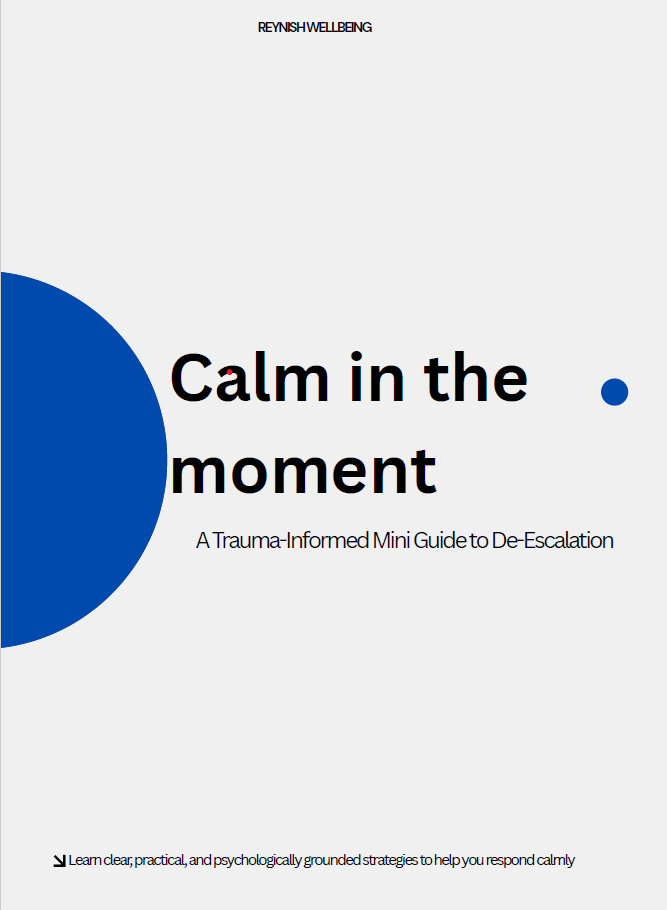
When people escalate, logic shuts down and safety becomes the priority.
This digital, trauma‑informed mini guide offers clear, practical and psychologically grounded strategies to help you respond calmly and effectively when someone is highly distressed, agitated, or overwhelmed.
Written by an experienced, accredited practitioner with decades of front-line experience, this guide bridges neuroscience, trauma‑informed practice, and real‑world application — without jargon or rigid scripts.
You’ll learn:
Why escalation is a nervous system response, not a behaviour problem
How trauma and threat affect communication and reasoning
Core principles of trauma‑informed de‑escalation
Practical strategies for calming situations safely and ethically
Language that helps regulate (and what to avoid)
What to do when de‑escalation doesn’t work
How to care for yourself after high‑stress incidents
This guide is ideal for:
Counsellors and EAP clinicians
Social workers, psychologists, and allied health professionals
Managers and HR professionals
Educators, supervisors, and team leaders
Front-line, healthcare, and community workers
What you’ll get:
A digital copy of a 14‑page PDF mini guide
Trauma‑informed, strengths‑based framework
Practical, immediately usable strategies
Suitable for individual practice or workplace settings
This resource is education‑focused, compassionate, and grounded in real‑world complexity — designed to support both client safety and practitioner wellbeing.
Do you find your mind replaying conversations, worrying about what might go wrong, or getting stuck analysing every decision?
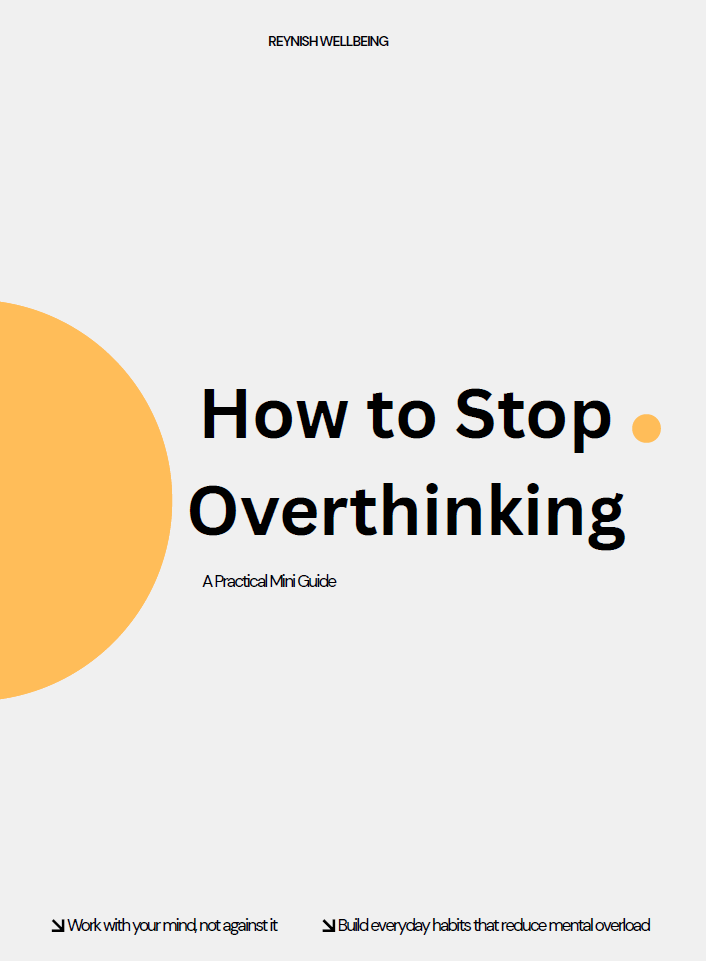
How to Stop Overthinking is a concise, practical mini guide designed to help you understand overthinking—and gently learn how to interrupt it.
This guide doesn’t tell you to “just stop thinking.” Instead, it shows you how to work with your mind, not against it.
What This Guide Covers
Across 10 short, easy‑to‑read sections, you’ll learn how to:
Understand why overthinking happens (and why it’s not a personal failing)
Identify your own overthinking patterns
Separate facts from thoughts
Set healthy mental boundaries
Move from endless thinking into meaningful action
Ground your mind when worry takes over
Change your relationship with difficult thoughts
Build everyday habits that reduce mental overload
Recognise when extra support may be helpful
Each page is designed to be practical, reassuring, and immediately usable.
Who This Is For
This mini guide is ideal if you:
Feel mentally “stuck” in worry or analysis
Struggle to switch off your thoughts
Experience rumination, self‑doubt, or over‑analysis
Want simple tools without overwhelming theory
Prefer a compassionate, non‑judgemental approach
It’s suitable for personal use, students, educators, and wellbeing settings.
What Makes This Guide Different
Short and focused—no fluff
Evidence‑informed, but written in plain language
Gentle and supportive (not rigid or prescriptive)
Practical strategies you can use immediately
Designed for real life, busy minds, and imperfect days
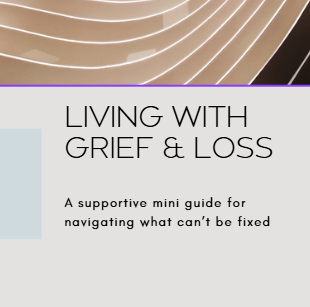
Living With Grief & Loss is a gentle, supportive mini guide for people navigating loss of any kind — including the death of a loved one, changes in health, relationships, identity, safety, or a future that no longer looks the way it once did.
Rather than offering solutions or timelines, this guide acknowledges that grief is a natural, human response to loss. It recognises that grief is not linear, does not follow neat stages, and often affects the whole person — emotionally, physically, cognitively, and socially.
Across short, accessible sections, the guide:
explores common experiences of grief
challenges unhelpful myths
offers compassionate reflections
provides practical suggestions for living alongside grief without becoming overwhelmed
supports readers to understand their reactions, care for their nervous system, set boundaries, and seek support when needed — all at their own pace
This guide is trauma‑informed, strengths‑based, and written with deep respect for individual experiences. It is not about “moving on” or finding closure, but about making space for grief while slowly integrating loss into life in meaningful, manageable ways.
Living With Grief & Loss is intended for educational and supportive purposes only and does not replace professional mental health care.
Above all, this guide offers a steady reminder:
You are not broken because you are grieving — you are responding to love and loss in a human way.
Counselling & Consultations
Select a convenient time for a counselling appointment or a consultation.
Feel free to email us for out of hours bookings. We look forward to working with you.

Get in touch.
Need another service? Let us know how else we can help.